Sit down. I'll tell you how it actually went.
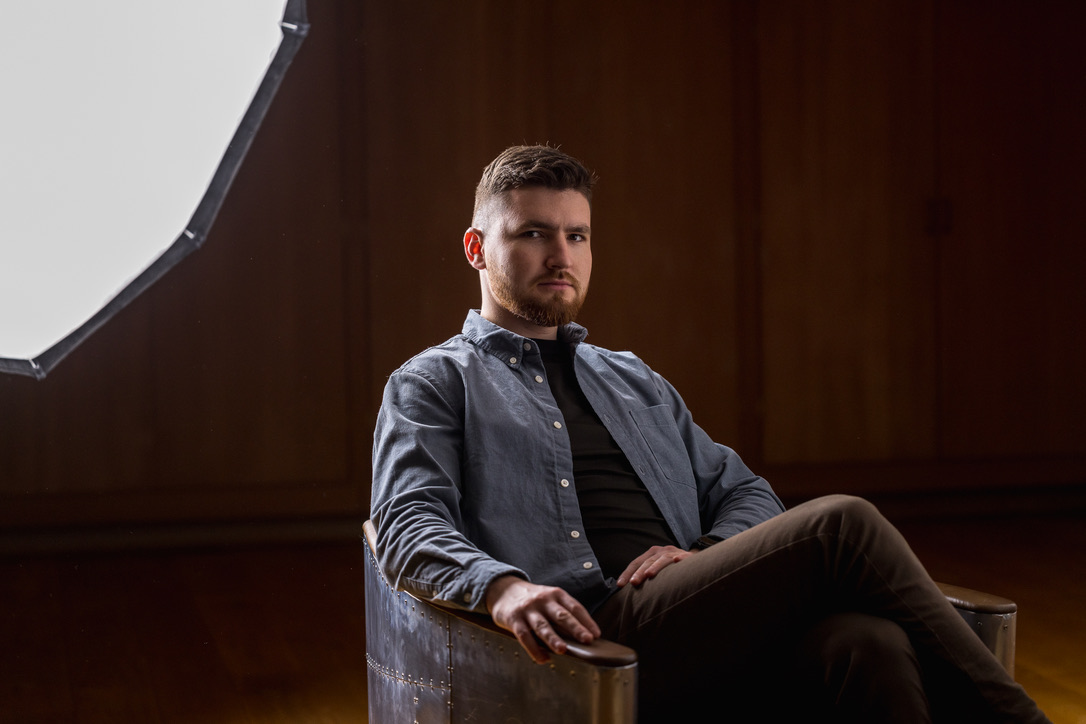
The story, on the record.
Vlasivka — a small town near Svitlovodsk, where I spent my conscious childhood. The kind of place that rewards trying a bit of everything, so I did. The radio club, where I learned to take electronics apart, put them back together, and fix what was broken. Chess. A little theatre. Boxing — almost mandatory in that environment. Guitar in a rock band. I tried myself in every direction I could reach, and the habit stuck: pick things up fast, find the angle, keep moving.
At seventeen, journalism did. I built a small free website and ran my own investigations — corruption, city problems, local politics — until the pressure came back from politicians and the local mafia, and I walked away. There were quieter detours too: a year in scouting before it got too ideological for an open mind, a stretch drawn to a local Buddhist group, keeping what inspired me. Versatile, if nothing else.
After school I didn’t know what to do with my life. I only knew I had to study, and that I had to be the best at it — and I could only stay the best, for years, at something that genuinely interested me. Psychology was that interest. I knew it barely paid, but it was true, so I went for it and trusted I’d find a way to earn later. The nearer reasons were concrete too: being the best kept my scholarship, and studying kept me out of the army — and with only my mom working, both mattered. I finished with honours, chased English on the side by any means I could find, mostly American missionaries and Peace Corps volunteers, and kept the lens the degree gave me: understanding people between the lines.
A psychologist at home earned about $170 a month. I did the work anyway — a year practising in a juvenile detention centre, which is about the hardest room you can learn in. Then I made the pragmatic move: I followed the money, and the money followed English. English plus IT turned out to be my combination, carried more by emotional intelligence and communication than by any formal IT training. That’s how I became a project manager.
Optimozg, a digital agency — I ran a portfolio of clients at once, which is its own discipline. MOSH, a brain-health startup, was one of them: I was the growth adviser on their digital roadmap, helped bring in a subscription model, and moved the retargeting off an older audience and onto younger, sport-driven people. Sales moved with it. Juggling that many accounts taught me consistency beats brilliance — being the person every team can count on, every week, not just the good ones.
I’m from Ukraine. I left for Copenhagen in 2022 with no way back. What it cost is not in question: the country I grew up in, the people still in it, and every version of my life that assumed I’d stay. I’ve spent every year since building something worth that price. Whatever softness I had, that trip took it. What stayed: patience, and a short list of things that still get to me.
My first project in Denmark. I kept operations and communication running between the delivery teams and the client through a full migration onto Salesforce, for a brand most people would recognize — builds, automations, ceremonies, the work never stopping for the migration. Once the client could stand on their own, we handed off the biggest part of it. The stack keeps changing under me — Marketing Cloud first, more of Salesforce now, AI and deeper consulting next. The job underneath hasn’t: people, aligned, moving.
I’ve got a young son. I’m also learning Danish, which is its own kind of hard — harder than Salesforce, some days. Whatever’s left over, I play chess.